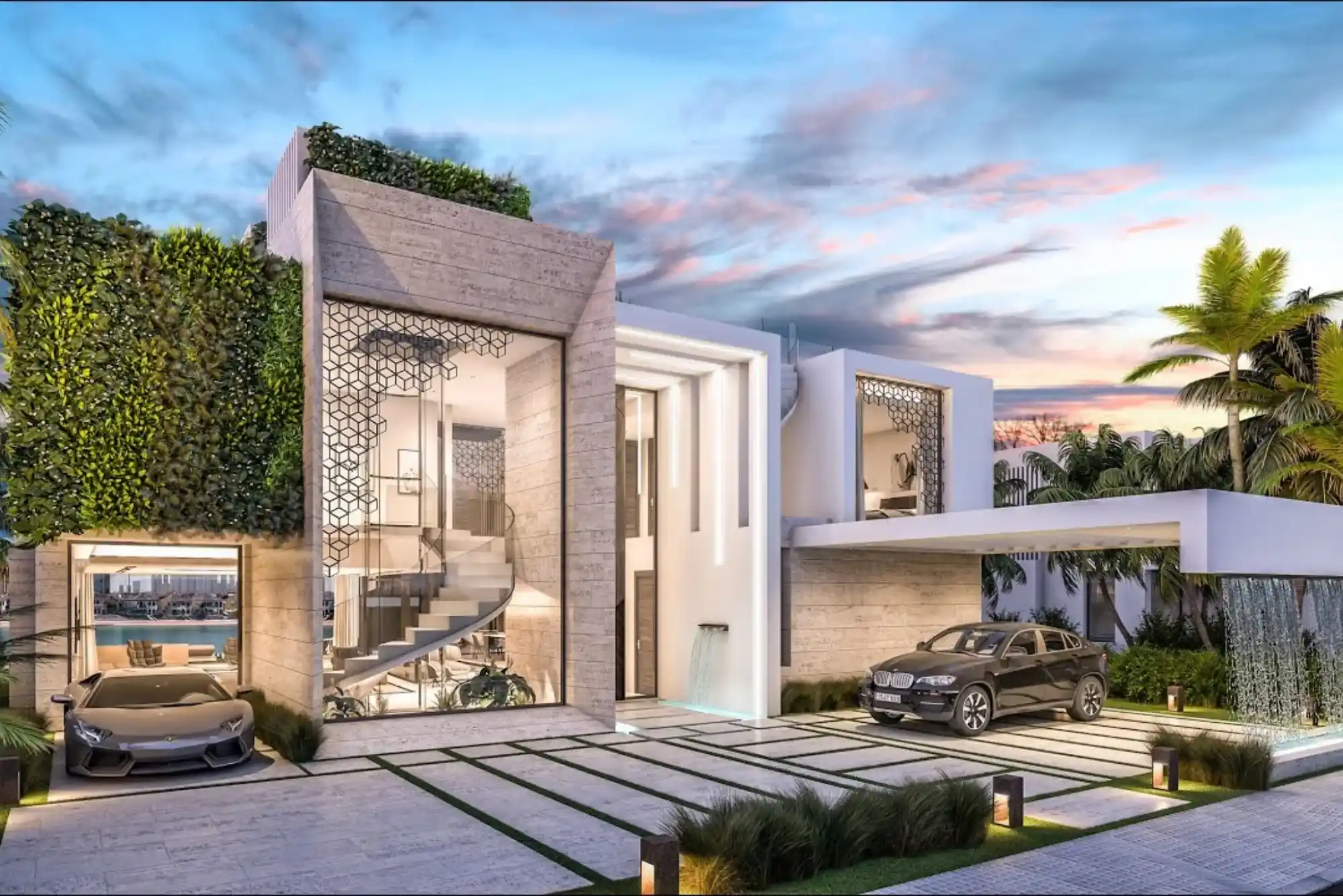
The word luxury appears in almost every property listing in Dubai. What is rarely discussed is
what genuine quality in architecture design Dubai actually requires — and why so few
finished, occupied buildings deliver it at the level the marketing suggests.
At the highest end of the private villa market, the clients arriving in Dubai in 2025 have owned property in London, Paris, and New York. They are not impressed by scale alone. They are looking for something harder to produce: a home that performs as well as it presents, that improves with time, and that fits their life rather than asking them to adapt to it.
Material Honesty Over Visual Drama
The defining characteristic of the most considered villa design in Dubai right now is material restraint. Rather than importing statement finishes and stacking them for effect, the best residential architects are working with a tighter palette — natural stone, aged timber, hand-applied plaster, patinated metal — and resolving the relationships between them with precision. The result is interiors that reward sustained attention rather than delivering an immediate visual impact that fades within months.
This is not minimalism in the cold sense. It is warmth achieved through material depth. Limestone floors that continue from interior to exterior terrace, unifying the threshold. Timber joinery designed with the proportional logic of furniture rather than construction. These are the
details that separate architecture from decoration.
Climate Performance as a Non-Negotiable
- “A home that asks you to stay indoors for six months of the year has
- failed at a fundamental level, regardless of how beautiful it is inside.”
Dubai’s extreme climate has historically been treated as a constraint to be overcome with powerful air conditioning. The most sophisticated contemporary the best practices treat it differently: as a primary design brief. Deep overhangs that block summer sun while admitting winter light, glazing specified for solar heat gain coefficient rather than visual effect, and courtyards that create usable microclimates within the villa boundary — these are the decisions that determine whether a home is comfortable across the year, not just in the render.
Process: Where Luxury Is Actually Made
Genuinely exceptional residential design requires time in the brief — understanding how the client and their family actually live. It requires a single point of accountability through design, specification, and delivery. The fragmented model — an architect for the shell, a separate interior designer for the fit-out, a third party for the landscape — creates coordination gaps that compound across the project and become visible in the finished building.
The homes that hold their quality over time tend to be those where a single practice held the
design intent from the first concept sketch to the final snagging inspection. To understand what
this continuity produces in practice, view Teal Design projects that span the full design and
build sequence
What to Ask a Villa Design Practice
Ask to see completed and occupied projects, not renders. Ask how the firm addresses solar gain on glazed elevations. Ask who leads the project through construction and at what level of site involvement. These questions reveal more about a practice’s approach than any portfolio photograph or marketing brochure.