
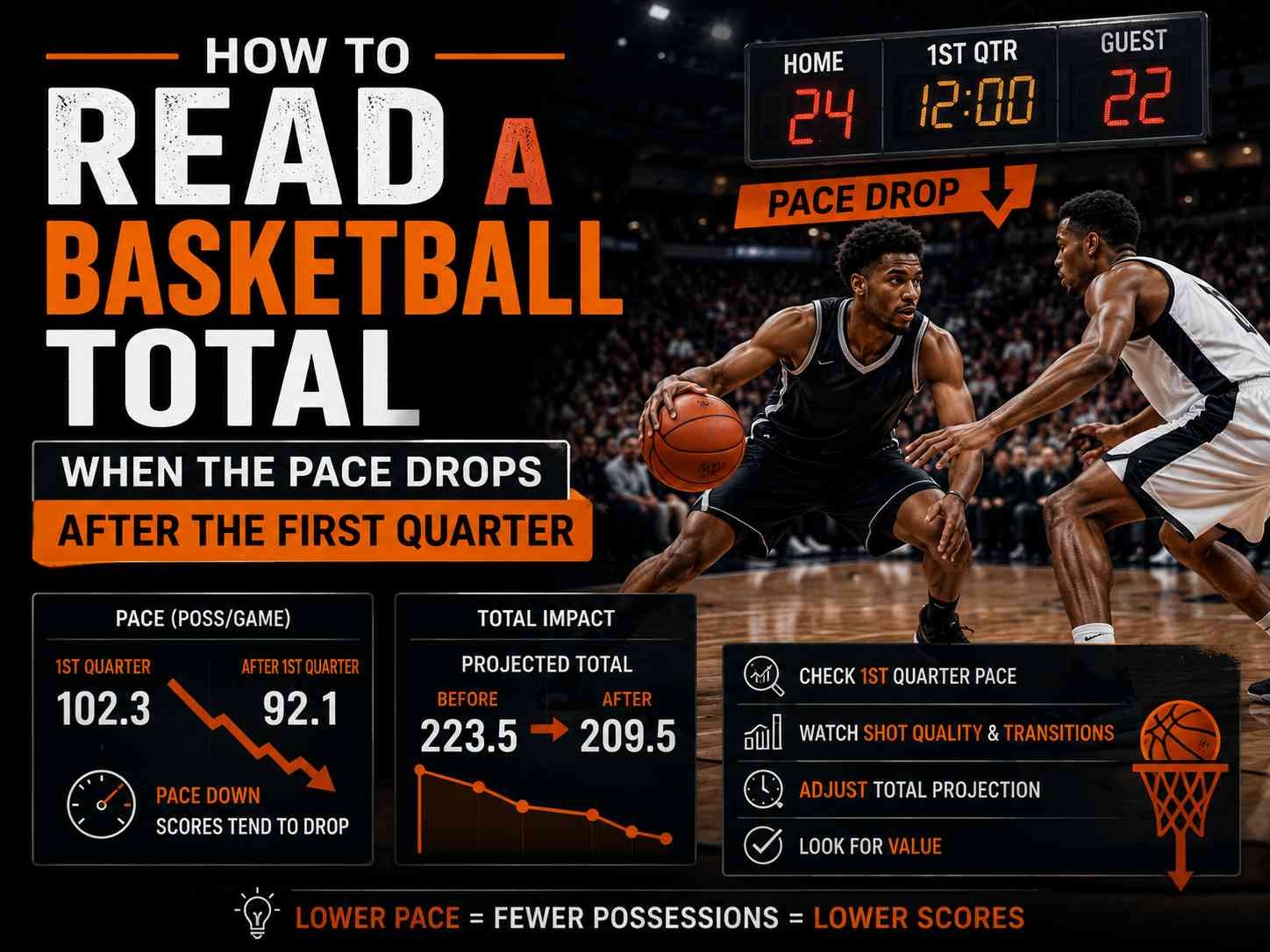
A basketball total can look attractive after a fast first quarter, but the next few minutes often show a different game. Teams may slow down because starters rest, coaches adjust transition defense or shooting cools after an early hot run. The bettor should not read the total only through points already scored. The better question is whether the pace that created those points can continue.
The first quarter can produce a misleading total pace. A 34-31 start may push the live number much higher, but if 18 of those points came from transition, second-chance plays and early-clock threes, the game may not stay that open. Once teams reduce turnovers and use longer possessions, the same matchup can move toward a lower scoring rhythm despite the strong opening.
The cleanest check is to compare the live total with the way possessions are being created after the break. If the line still prices the game as a shootout Pinco fits into the analysis when checking whether the new rhythm supports that higher number. A falling pace does not always mean automatic under, but it does mean the over now needs better shot quality to survive.
Pace often falls when rotations change. Starters may push early, while bench units use slower half-court sets. A team that scored quickly through its lead guard can become more deliberate when the second unit enters. If possessions stretch from 12-14 seconds to 18-20 seconds, the total loses volume even before shooting percentages change.
Coaching adjustments also matter. After a fast first quarter, teams usually protect the ball better, send fewer players to the offensive glass or get back earlier in transition. These small changes cut easy points. A live total that moved up by 10-14 points after one quarter can become fragile if the second quarter starts with longer attacks and fewer clean rim chances.
The most useful signal is not the score, but how the second quarter begins. If the first 3-4 minutes include late-clock shots, fewer fast breaks and more set defenses, the original scoring pace is already weakening. In that spot, the live under can be stronger than it looks, especially if the market is still anchored to the first-quarter score.
A pace drop and a shooting slump are different things. If teams still create quick open looks but miss them, the over may remain alive because the process is stable. If they stop creating early advantages, the total has a deeper problem. The bettor should count possessions and shot zones, not only missed shots. Bad misses from good areas are less worrying than slow possessions ending in forced attempts.
Fouls can keep a total high even when pace falls. If both teams enter the bonus early, free throws add points without needing fast possessions. But if referees allow contact and teams settle into half-court defense, the under gains strength. A slower game with few fouls forces the over to rely on efficient shooting, which is a narrower path.
The over can still be playable if pace drops slightly but shot quality remains strong. A team may slow the game while still getting paint touches, offensive rebounds and open corner threes. In that case, fewer possessions can be offset by better efficiency. The over is weaker only when both volume and quality fall together.
Another over signal is poor defensive adjustment. If the pace falls because teams walk the ball up, but one side still cannot defend pick-and-roll or protect the rim, scoring can stay high. The market may overreact to slower tempo and offer a lower entry. This is why the bettor should avoid treating pace as the only factor.
Stake size should be smaller when the read depends on live rhythm. A normal 1% bankroll position can be reduced to 0.5% if the pace drop is new and not yet stable. Basketball tempo can swing again after substitutions or timeouts. A short sample should guide the bet, not control the whole bankroll.
Waiting one more rotation can be useful. If starters return and the tempo rises again, an early under may lose value. If bench minutes reveal that both coaches prefer slower control, the under becomes clearer. The best live total entry often comes after confirming whether the pace change belongs to one lineup or to the whole game plan.
Reading a basketball total after the pace drops following the first quarter means separating points already scored from the rhythm that remains. Check possession length, rotations, shot quality, fouls, turnovers and live line movement. A fast first quarter can inflate the number, but a slower second quarter does not automatically mean under. The best bet is the one where the current price matches the new pace and scoring quality.