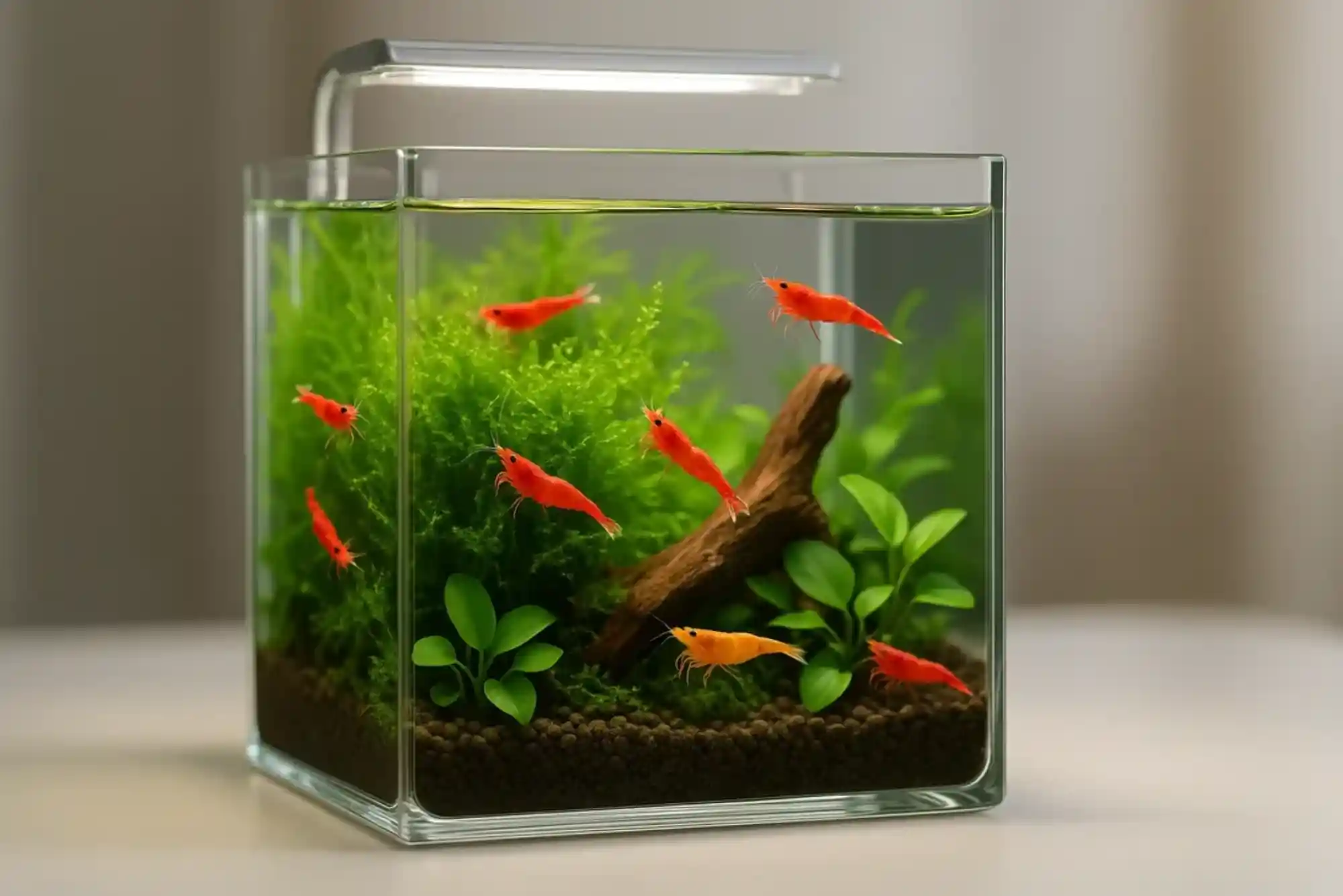

Breeding cherry shrimp in a nano tank is a rewarding way to enjoy a thriving freshwater aquarium without needing a large setup. These small, colorful invertebrates are relatively easy to breed when their environment is stable, their diet is balanced, and they have plenty of places to hide. Whether you are a beginner or an experienced aquarium hobbyist, learning how to breed cherry shrimp in a nano tank can help you establish a healthy colony that grows naturally over time.
Cherry shrimp, commonly sold as red cherry shrimp, are a color variety of Neocaridina davidi. They adapt well to properly maintained aquariums and reproduce readily when conditions are suitable. However, a small tank leaves less room for mistakes. Sudden changes in temperature, water chemistry, or water quality can affect adult shrimp, eggs, and newly hatched babies.
This complete guide explains how to prepare your nano aquarium, select healthy breeding shrimp, maintain suitable water parameters, encourage reproduction, and raise baby shrimp successfully.
A nano tank is generally a small aquarium, often around 5–10 gallons, although smaller tanks are also used by experienced shrimp keepers. Cherry shrimp are well suited to these compact environments because they have a small body size and a relatively low biological waste output.
A dedicated shrimp tank also makes it easier to monitor breeding activity, observe egg development, and protect baby shrimp from potential predators. With enough moss, biofilm, and stable water conditions, a small aquarium can support a productive colony.
The main challenge is stability. Water conditions can change quickly in a small volume, especially when feeding too much, performing large water changes, or allowing uneaten food to decompose. Therefore, successful breeding depends more on consistency and careful maintenance than on expensive equipment.
A 5-gallon tank is a practical starting point for a small cherry shrimp colony. A 10-gallon aquarium offers more room for plants, filtration, and population growth, making it easier to maintain stable water conditions.
Although shrimp can survive in smaller aquariums, beginners should generally avoid extremely small containers. Less water means less protection against sudden changes in temperature, ammonia, and mineral concentration.
Start with approximately 10–15 healthy shrimp if your aquarium is mature and appropriately sized. A group containing both males and females gives you a better chance of establishing a breeding colony.
Filtration is essential because beneficial bacteria help process toxic waste. However, the filter intake must not trap or injure tiny shrimp.
A sponge filter is one of the best choices for a cherry shrimp nano tank. It provides biological filtration, gentle water movement, and a large surface for beneficial bacteria and biofilm to develop. It also reduces the risk of baby shrimp being pulled into the filter.
Avoid strong water currents that make it difficult for shrimp to move around. Gentle circulation is sufficient as long as the tank has adequate oxygenation and effective filtration.
Live plants make a significant difference when breeding cherry shrimp. They provide shelter, grazing surfaces, and places where newly hatched shrimp can remain safe.
Java moss, Christmas moss, subwassertang, and other fine-leaved aquatic plants are useful choices. Floating plants can also help absorb excess nutrients, while smooth stones and aquarium-safe driftwood create additional surfaces for biofilm.
Do not clean every surface until it looks spotless. A mature shrimp aquarium naturally develops microscopic organisms that shrimp graze on throughout the day. This biofilm is particularly valuable for tiny babies that cannot easily compete for larger food particles.
Never rush the cycling process. A new aquarium needs time to develop beneficial bacteria that convert ammonia into nitrite and then nitrate.
Before introducing cherry shrimp, test the water and confirm that ammonia and nitrite are consistently undetectable. A properly cycled aquarium also needs a stable environment and enough established surfaces for natural grazing.
Cycling time varies depending on the method, equipment, and bacterial development. Do not rely on a fixed number of days or clear-looking water as proof that the aquarium is ready.
Water stability is one of the most important factors in cherry shrimp breeding. Although these shrimp tolerate a reasonable range of conditions, sudden changes can cause stress, failed molts, and losses among young shrimp.
A temperature of approximately 22–24°C (72–75°F) is a useful target for a breeding colony. Cherry shrimp can tolerate a broader range, but warmer water generally increases metabolism and may shorten their lifespan. Cooler conditions can slow growth and reproduction.
Use a reliable aquarium thermometer to monitor changes. If your room experiences large temperature swings, a small adjustable heater may help maintain consistency.
The pH measures how acidic or alkaline the water is. A pH around 6.8–7.8 is generally suitable for cherry shrimp, provided the water remains stable.
General hardness (GH) indicates the concentration of minerals, particularly calcium and magnesium, that shrimp need for normal physiological function and molting. A practical target is around 6–8 dGH.
Carbonate hardness (KH) helps buffer changes in pH. A range around 2–5 dKH can work well for many colonies, although suitable values depend on the overall water chemistry.
These ranges are starting points rather than rigid requirements. Healthy shrimp can thrive outside them when the parameters are appropriate and stable. Avoid chasing a particular number with frequent chemical adjustments.
Ammonia and nitrite should remain at 0 ppm. Even low concentrations can harm shrimp, especially babies and animals preparing to molt.
Keep nitrate preferably below 20 ppm, with lower concentrations often desirable in a planted shrimp aquarium. Regular testing and modest water changes help prevent nitrate and other dissolved waste products from accumulating.
If shrimp suddenly become inactive, attempt to escape the water, or die unexpectedly, test the water promptly rather than assuming the problem is a lack of food.
Choose shrimp that move normally, graze on surfaces, and respond to their surroundings. Avoid animals that appear severely weak, have unexplained discoloration, or show signs of disease.
Bright red coloration is popular, but color intensity alone does not determine health or breeding ability. Young shrimp may have less intense coloration than mature adults.
Female cherry shrimp are often larger and more deeply colored than males. Mature females typically have a broader, rounded abdomen that helps protect their eggs. Males are generally smaller, slimmer, and more translucent.
Females may develop a yellowish or greenish cluster of unfertilized eggs behind the head, commonly called a saddle. This is the developing ovarian region and can indicate reproductive maturity.
For a beginner, a mixed group of around 10–15 shrimp is a reasonable starting point in a suitable mature tank. Because sexing young shrimp can be difficult, purchasing a mixed group from a reputable seller is often easier than trying to select individual males and females.
Once the aquarium is established and healthy adults are introduced, breeding often happens naturally. You do not need special breeding equipment or complicated techniques.
Maintain suitable water parameters, avoid sudden temperature changes, and keep ammonia and nitrite at zero. A stable environment encourages females to molt normally and become receptive to mating.
Female cherry shrimp release reproductive signals after molting. Males may swim rapidly around the aquarium while searching for a receptive female. This sudden burst of activity is a normal part of their reproductive behavior.
After mating, the female transfers her eggs to the underside of her abdomen. She carries them beneath her swimmerets, which move continuously to circulate water and help keep the eggs oxygenated.
A berried female may carry several dozen eggs, although the number varies with her size, age, health, and environmental conditions.
Avoid handling or relocating berried females unnecessarily. Maintaining a peaceful aquarium with plenty of cover is usually more effective than attempting to intervene in the breeding process.
Egg development generally takes around 3–4 weeks, depending largely on temperature and other conditions. As the eggs develop, you may notice small dark eye spots inside them.
When the eggs hatch, the babies emerge as miniature shrimp rather than free-swimming larvae. They immediately begin grazing on biofilm, microorganisms, and other tiny food sources available in the aquarium.
You usually do not need to separate the mother from the babies. Cherry shrimp do not normally hunt their own young, so a well-planted colony tank can support adults and babies together.
Cherry shrimp spend much of their time grazing on algae, biofilm, and decomposing plant material. In an established aquarium, these natural food sources provide an important foundation for their diet.
Supplement them with a quality shrimp-specific food, algae-based pellets, or other suitable formulated foods. Small amounts of blanched vegetables can occasionally add variety, provided uneaten pieces are removed before they decay.
Feed conservatively. Overfeeding is particularly dangerous in nano tanks because decomposing food can increase ammonia and reduce water quality. Offer only what the colony can reasonably consume and adjust portions according to the amount of natural grazing available.
Newly hatched cherry shrimp are extremely small and need accessible food. They graze on biofilm and microorganisms growing on moss, plant leaves, driftwood, and other aquarium surfaces.
A mature, planted tank often provides a better nursery environment than a newly established aquarium. If supplemental feeding is necessary, use a small amount of fine powdered shrimp food or a product designed for juvenile shrimp.
Distribute food carefully so it reaches the surfaces where babies live. Avoid adding large amounts of powder, which can cloud the water and contribute to waste buildup.
Routine maintenance helps protect breeding adults and developing babies. However, large or sudden water changes can cause more harm than good when the replacement water differs significantly from the aquarium.
A modest weekly water change of approximately 10–20% is a reasonable starting point for many established nano tanks. The ideal schedule depends on stocking density, feeding, filtration, and water-test results.
Use dechlorinated replacement water and match its temperature and mineral content as closely as practical. Add the new water gradually, especially if your source water differs noticeably from the tank.
Remove excess food and decaying plant matter, but avoid aggressively cleaning moss, substrate, and every surface where biofilm develops. If you clean the sponge filter, rinse it gently in removed aquarium water rather than untreated tap water.
Test the aquarium more frequently during the early stages of setup, after significant changes, and whenever shrimp behave unusually. Once the tank is stable, a consistent testing and maintenance routine will help you catch problems before they affect the colony.
If your cherry shrimp are not reproducing, check their age, sex ratio, water stability, and overall health. A group may contain mostly males or females, or the shrimp may still be too young to breed.
Poor nutrition and an immature aquarium can also limit reproductive success. Give the colony time to settle before making unnecessary changes.
Females may occasionally drop eggs because of stress, poor health, or problems during their reproductive cycle. Sudden water changes and unstable parameters can contribute to these issues.
Not every egg will develop successfully. Focus on stable conditions, good nutrition, and minimizing unnecessary disturbance instead of trying to handle the eggs manually.
Newborn shrimp are vulnerable to ammonia, nitrite, contaminants, and abrupt changes in water chemistry. Insufficient biofilm can also make it difficult for them to find food.
Check water quality first. Make sure the aquarium is mature, the filter is shrimp-safe, and any plant treatments or cleaning products used near the tank are safe for invertebrates. Copper-containing treatments can be particularly hazardous to shrimp.
Color variation can result from genetics, age, stress, or the background and surroundings of the aquarium. Selective breeding can gradually improve red coloration, but it cannot compensate for poor health or unsuitable water conditions.
If the entire colony becomes pale or inactive, investigate water quality and environmental stress before focusing on appearance.
Cherry shrimp can reach reproductive maturity in roughly 3–5 months under suitable conditions, although growth rates vary with temperature, diet, genetics, and water quality.
After hatching, the young shrimp grow through a series of molts. As the colony matures, females may reproduce repeatedly when conditions remain favorable.
Population growth is not always linear. Food availability, space, water quality, and competition influence survival. In a small nano tank, the colony may eventually reach a natural balance determined by the resources available.
If the population grows quickly, avoid adding too much food or allowing waste to accumulate. Consider upgrading the aquarium if the colony becomes crowded or maintaining stable water conditions becomes difficult.
Learning how to breed cherry shrimp in a nano tank is mainly about creating a stable, healthy environment and allowing nature to take its course. A mature aquarium, shrimp-safe filtration, suitable water parameters, live plants, and a balanced feeding routine provide the foundation for successful reproduction.
Remember that consistency matters more than chasing perfect numbers. Avoid sudden water changes, keep ammonia and nitrite at zero, and provide plenty of biofilm for newly hatched shrimp. With patience, your original group can develop into a thriving colony that continues reproducing over time.
Ready to start your own shrimp-breeding project? Prepare your nano tank, test your water, and introduce a healthy group of cherry shrimp once the aquarium is fully cycled. Follow these practices consistently, and you will give your shrimp the best opportunity to thrive and reproduce.
A 5-gallon tank can support a small starter colony of around 10–15 cherry shrimp when it is mature, properly filtered, and well maintained. A 10-gallon tank provides more room for population growth and offers greater stability. The appropriate population depends on filtration, food availability, and water quality.
Cherry shrimp eggs typically hatch in approximately 3–4 weeks, depending on temperature and the health of the female. The mother carries the eggs beneath her abdomen and regularly fans them. When they hatch, the babies emerge as tiny, fully formed shrimp rather than free-swimming larvae.
Yes, cherry shrimp can breed readily in a properly maintained nano tank. They need a mature aquarium, stable water chemistry, both males and females, and enough food and shelter. A sponge filter and plenty of moss can help protect the babies as the colony grows.
A temperature of approximately 22–24°C (72–75°F) is a useful starting point for breeding cherry shrimp. They tolerate a broader temperature range, but sudden fluctuations and prolonged excessive heat can cause stress. Maintaining a consistent temperature is more important than repeatedly adjusting the aquarium to reach a specific number.
Cherry shrimp generally do not prey on their own young. Adult shrimp may occasionally consume vulnerable animals or organic material, but they are not normally aggressive toward healthy babies. Providing moss, plants, and biofilm gives baby shrimp shelter and access to food without requiring a separate nursery tank.
Baby cherry shrimp primarily graze on biofilm, microorganisms, and tiny organic particles found on plants, moss, driftwood, and aquarium surfaces. In a mature tank, these natural food sources can provide much of their diet. You can supplement them with small amounts of fine powdered shrimp food when necessary.
Common reasons include having too few mature females, an unsuitable male-to-female balance, unstable water parameters, insufficient nutrition, and an immature aquarium. Check ammonia, nitrite, temperature, GH, and KH before making changes. Give the shrimp time to settle and avoid repeatedly adjusting the water chemistry.
Cherry shrimp can sometimes survive and reproduce in a 2-gallon aquarium, but such a small volume is less forgiving of temperature changes, excess food, and waste buildup. Beginners will generally have an easier time maintaining a stable breeding colony in a 5–10-gallon tank.
Not necessarily. If the room stays within a suitable, stable temperature range, a heater may be unnecessary. However, if temperatures fluctuate significantly or become too cold, an adjustable aquarium heater can help maintain suitable conditions. Always monitor the actual water temperature rather than relying on room temperature alone.
Keep the aquarium mature, maintain stable water chemistry, use a sponge filter, and provide dense moss or other fine-leaved plants. Make sure biofilm is available for grazing, avoid overfeeding, and keep fish that might eat baby shrimp out of the breeding tank. Small, carefully matched water changes also help protect young shrimp.