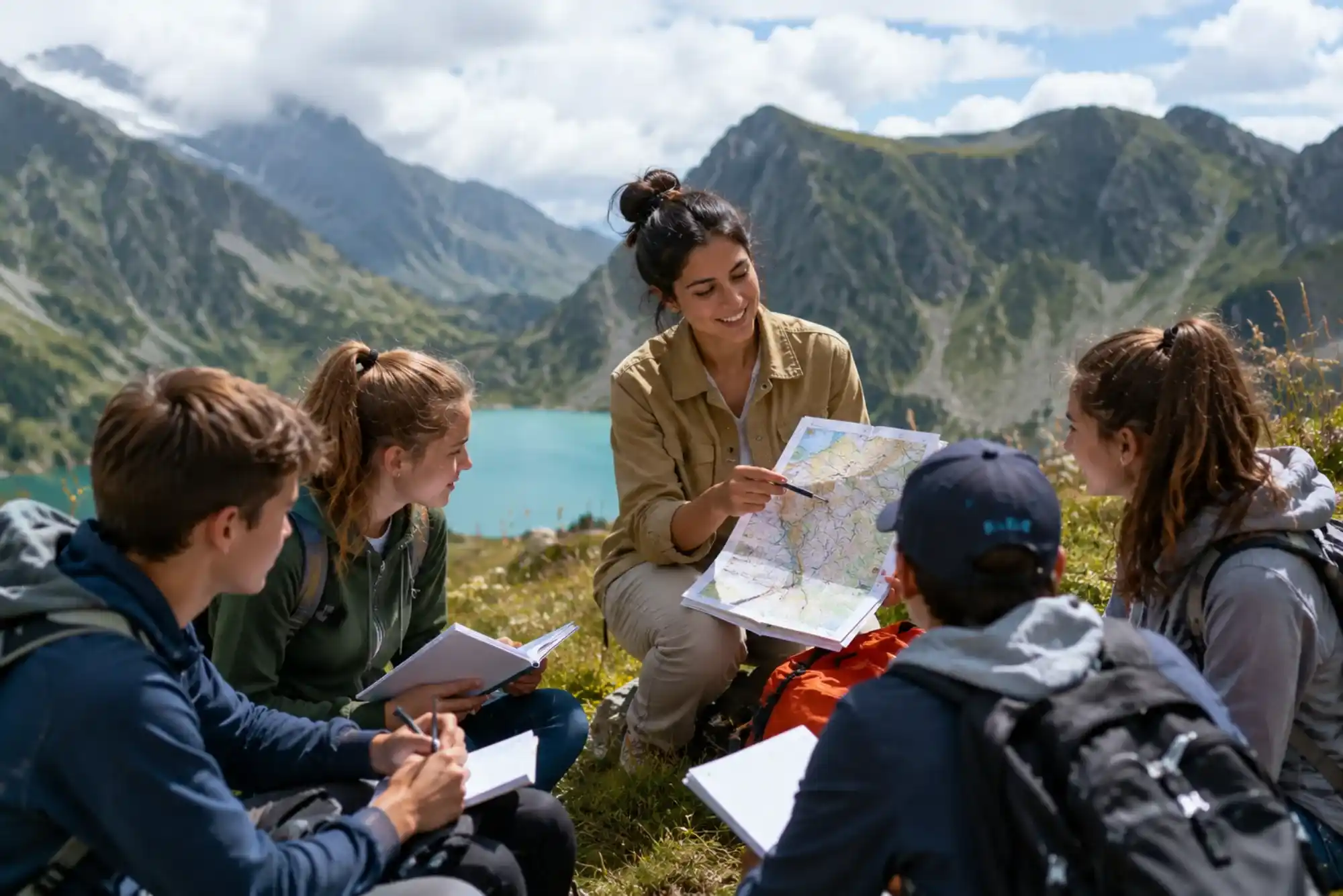
Some of the most memorable lessons never happen inside a classroom. They happen while navigating a crowded market in a foreign city, discussing history beside ancient architecture, or learning environmental science during a coastal trek. Over the last few years, travel-based learning programs have evolved from niche educational experiences into meaningful alternatives for students, remote learners, and families seeking something more immersive than traditional study routines.
What makes these programs especially compelling is the way they merge academic growth with real-world exploration. A student may spend the morning studying marine ecosystems and the afternoon visiting a local fishing district, connecting textbook concepts to everyday life. That blend of curiosity and lived experience has become one of the defining appeals of modern educational travel.
Traditional learning environments still matter, but many students and parents are recognizing that experiential education often creates stronger engagement. Educational travel encourages adaptability, communication skills, cultural awareness, and independence in ways conventional classrooms sometimes struggle to replicate.
Families are also looking for alternatives to passive tourism. Instead of simply visiting landmarks and taking photos, students are participating in language immersion workshops, environmental projects, cooking classes, archaeological tours, and regional history programs.
In destinations known for cultural diversity, food traditions, and waterfront experiences, travelers often discover that local identity becomes part of the learning process itself. Exploring places with strong culinary heritage, for example, can help students understand trade routes, sustainability, and regional economies all at once.
That’s one reason destinations offering authentic cultural experiences continue attracting educational travelers. Articles discussing Dubai’s local food culture and culinary districts show how travel experiences increasingly overlap with education, storytelling, and cultural understanding.
Not every travel experience qualifies as educational travel. The strongest programs are intentionally structured around learning objectives while still leaving space for exploration and spontaneity.
A typical guided vacation might prioritize sightseeing efficiency. Educational travel programs, on the other hand, focus on participation and reflection. Students are encouraged to ask questions, engage with local communities, and connect academic concepts to real environments.
That distinction matters because deeper engagement often creates longer-lasting memories and stronger intellectual curiosity.
Well-designed programs usually include:
The educational component is not treated as homework. Instead, it becomes naturally woven into the travel experience itself.
Students participating in immersive travel programs often develop confidence more quickly than they expect. Navigating unfamiliar places teaches practical problem-solving in real time. Even simple tasks — ordering food in another language, using public transportation, or interacting with local communities — can improve communication skills and adaptability.
There’s also a noticeable difference in retention. Historical facts learned beside archaeological ruins or environmental lessons taught during coastal expeditions tend to feel more immediate and memorable.
Programs that incorporate sustainability themes are especially effective because they connect students with real environmental challenges. Coastal destinations, fisheries, conservation areas, and local food systems all provide opportunities for practical learning.
Conversations around ethical sourcing and sustainability practices have become part of many educational travel discussions, particularly in destinations where marine life and local economies are closely connected.
The idea of learning while traveling used to be limited to semester-abroad programs or organized school tours. Today, the landscape is far more flexible.
Some students join short-term educational expeditions lasting a week or two. Others participate in remote-learning travel communities where families relocate temporarily while continuing online studies.
This flexibility has created opportunities for:
Programs are also becoming more interdisciplinary. A single experience might combine geography, ecology, local cuisine, architecture, and storytelling into one integrated learning journey.
Adventure changes the emotional intensity of education. A student studying marine biodiversity from a textbook may understand the facts intellectually, but snorkeling near coral ecosystems or visiting active fishing communities creates emotional context that deepens understanding.
This emotional connection often becomes the reason students stay curious long after a program ends.
Adventure-based learning also encourages resilience. Weather disruptions, unfamiliar environments, and cultural differences teach flexibility in ways structured classroom routines rarely can.
Travel experiences involving local markets, waterfront communities, and traditional food systems are particularly memorable because they engage multiple senses at once. Discussions about regional seafood traditions, for example, can reveal economic history, migration patterns, sustainability challenges, and culinary identity simultaneously.
That connection between travel and regional identity is reflected in resources exploring tourist experiences inside Dubai’s seafood markets, where culture and commerce intersect in highly visible ways.
Not all educational travel programs are equally effective. Some prioritize marketing aesthetics more than actual learning quality. Others overload schedules so heavily that students barely have time to absorb what they experience.
The strongest programs balance structure with flexibility.
| Program Feature | Why It Matters |
|---|---|
| Local expert involvement | Provides authentic cultural and historical insight |
| Small group sizes | Encourages participation and discussion |
| Experiential activities | Improves engagement and memory retention |
| Flexible schedules | Prevents burnout and encourages exploration |
| Reflection opportunities | Helps students process experiences meaningfully |
Programs that focus only on sightseeing often lose educational depth. The most effective experiences allow students to slow down, ask questions, and interact with local environments meaningfully.
Digital learning tools have transformed how educational travel programs operate. Students can now participate in live coursework, collaborative online discussions, and remote mentorship while moving between destinations.
That flexibility allows learning experiences to continue without interruption. Some programs even combine local field experiences with virtual academic instruction from international educators.
Interactive maps, translation tools, digital journals, and virtual collaboration platforms have made educational travel more accessible and organized than it was even a decade ago.
Still, the human side of learning remains the most important element. Technology supports the experience, but genuine curiosity, conversation, and cultural interaction are what create lasting impact.
Many students initially join travel programs for adventure, but cultural immersion frequently becomes the most transformative aspect.
Watching daily routines in another country challenges assumptions about lifestyle, work, family, and community. Students begin noticing how geography, climate, economics, and history shape local identity.
Food experiences are often central to this process because cuisine reflects migration, trade, tradition, and environmental conditions. A cooking workshop or market visit can teach more about a region’s history than a lecture sometimes can.
Travelers exploring coastal destinations often discover that seafood traditions reveal surprisingly complex stories about sustainability, commerce, and local culture. Experiences connected to culinary adventures and regional food experiences increasingly appear inside educational travel itineraries for exactly this reason.
As educational travel grows more popular, safety standards have become increasingly important. Families want programs that provide meaningful independence without sacrificing organization and support.
Strong travel-learning programs typically include:
Programs designed thoughtfully tend to create a balance where students feel independent while still having reliable support structures in place.
The best organizations also prepare students emotionally for travel, helping them understand culture shock, communication differences, and respectful behavior before departure.
One overlooked benefit of educational travel is the way it strengthens independent thought. Students are constantly exposed to unfamiliar perspectives, which naturally encourages reflection and questioning.
A history lesson feels different when students stand in places where major events occurred. Environmental conversations change when learners witness sustainability challenges firsthand. Cultural discussions become more nuanced when students spend time inside local communities rather than reading summaries online.
Programs built around guided exploration encourage curiosity instead of passive memorization.
That shift toward active learning is one reason many parents and educators now see educational travel as a long-term investment rather than a short-term experience.
Most people forget ordinary classroom routines surprisingly quickly. Experiences connected to emotion, challenge, movement, and discovery tend to stay vivid for much longer.
Educational travel combines all of those elements simultaneously.
Students remember the conversations they had during long train rides, the local guide explaining regional traditions, the first meal they learned to cook themselves, or the unexpected moments that forced them to adapt.
The strongest programs understand that meaningful education rarely comes from information alone. It comes from context, participation, and emotional connection.
That’s why educational travelers are increasingly seeking programs that prioritize immersion over rigid schedules. Resources discussing travel tutor experiences often highlight how guided learning becomes more impactful when students actively participate in the journey rather than simply observing it.
The growing popularity of remote work, digital learning, and flexible education models suggests that travel-based learning will continue expanding.
Future programs will likely become even more personalized. Some may focus on environmental science and conservation. Others may center around culinary heritage, architecture, language immersion, or regional storytelling.
Students increasingly want experiences that feel connected to the real world rather than isolated from it.
Destinations that successfully combine culture, accessibility, sustainability, and experiential opportunities will continue attracting educational travelers seeking something deeper than traditional tourism.
In many ways, educational travel reflects a broader shift in how people think about learning itself. Knowledge is no longer confined to classrooms or textbooks. It exists in conversations, environments, traditions, and experiences shared across cultures.
For students willing to step outside familiar routines, those experiences often become the lessons they carry longest.
Related Reading: Solo Hiking in Portland: Safe and Scenic Trails
Related Reading: Best Way to Recharge Hafilat Card
Related Reading: Flight Ticket Guide: Booking, Types And Travel Tips