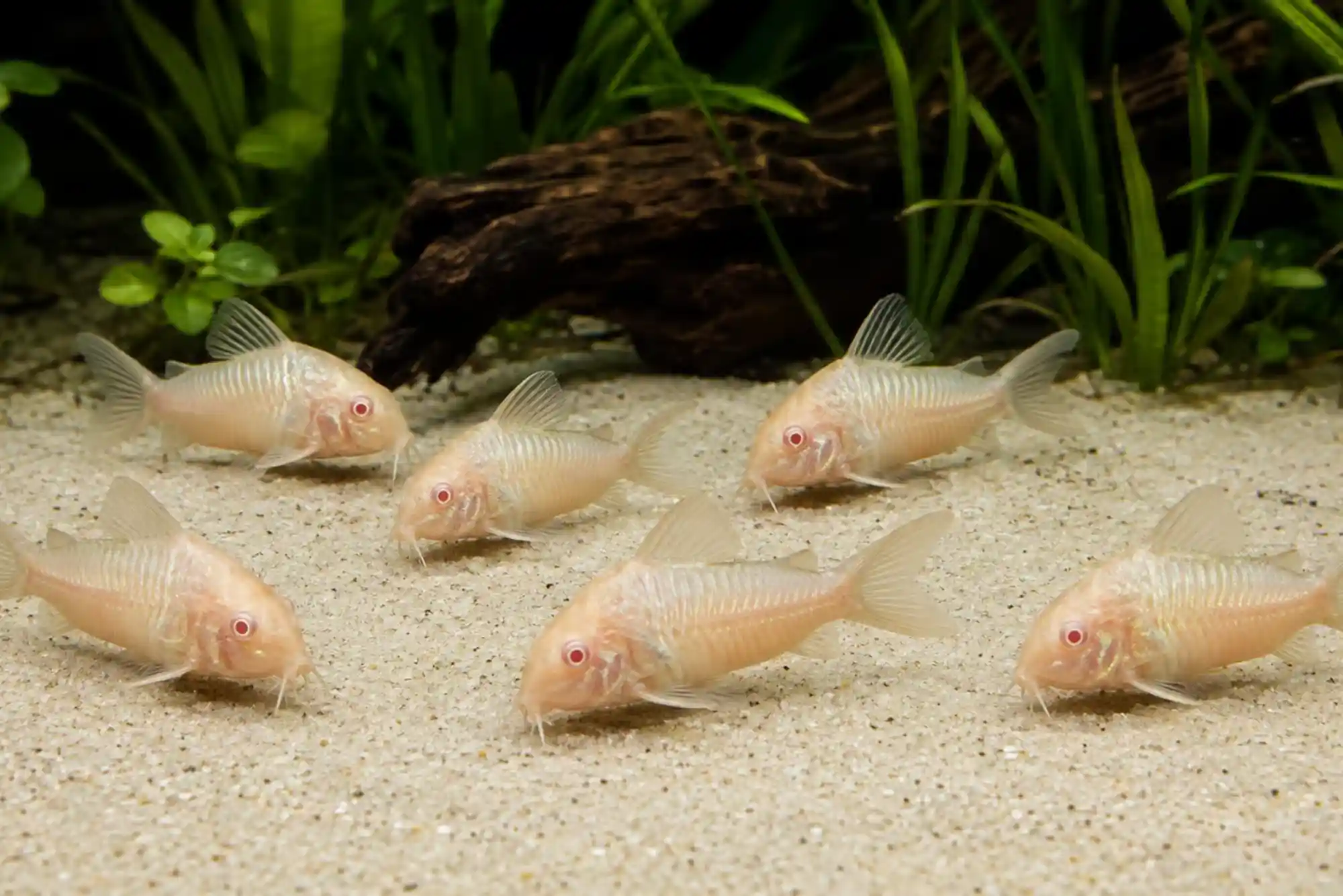

Corydoras catfish are among the most entertaining freshwater fish for a peaceful community aquarium. These small South American bottom dwellers spend their days exploring the substrate, searching for food, and interacting with members of their own species. Their armored bodies and expressive barbels make them especially appealing to both new and experienced aquarists.
However, good Corydoras catfish care involves more than dropping a few fish into a community tank. Their feeding habits, substrate, social needs, water quality, and tank footprint all matter. Two areas deserve particular attention: providing a safe substrate for their sensitive barbels and keeping them in a sufficiently large group.
Most commonly kept Corydoras species reach roughly 1 to 3 inches, although size varies considerably by species. They are generally peaceful and can work well with other calm community fish. Aquarium Co-Op recommends keeping at least six Corydoras of the same species, while several current care references also emphasize that larger groups encourage more natural behavior.
This guide explains Corydoras catfish care with a practical focus on diet, sand substrate, schooling group size, tank setup, and everyday maintenance.
Corydoras belong to a group of small freshwater catfish native to South America. They are bottom-oriented fish, but describing them simply as “bottom cleaners” can lead to poor care.
Corydoras actively forage for food using sensitive barbels around their mouths. They sift through the substrate and investigate surfaces, plants, wood, and other areas of the aquarium.
They are also social fish. In nature, Corydoras can occur in large groups, and their social behavior becomes much more obvious when they are maintained with several members of their own species.
That is why successful Corydoras catfish care should be designed around the needs of the entire group rather than a single fish.
They can be excellent beginner fish when their basic requirements are met. They are peaceful, relatively hardy, and fascinating to watch.
The common mistake is assuming that “hardy” means they can tolerate neglected water, inappropriate substrate, or inadequate feeding. They still need a mature, cycled aquarium and consistent maintenance.
Tank volume is important, but the aquarium’s footprint matters particularly for Corydoras. Because they spend much of their time near the bottom, horizontal floor space is more useful than excessive tank height.
For many standard Corydoras species, a 20-gallon aquarium is a practical starting point for a proper group. Dwarf species such as pygmy Corydoras can have different space requirements, while larger species need more room. Aquarium Co-Op recommends 20 gallons or more for most varieties and notes that dwarf species may work in smaller aquariums.
Before purchasing fish, identify the exact species. Temperature preferences, adult size, and appropriate tank dimensions can differ between Corydoras species.
A well-designed tank should provide open areas where the fish can forage, along with plants, wood, rocks, or other structures that provide cover.
Substrate is one of the most discussed subjects in Corydoras catfish care, and for good reason.
Corydoras constantly investigate the bottom with their barbels. A smooth, fine substrate allows them to forage naturally without repeatedly rubbing their sensitive facial structures against sharp edges.
Fine aquarium sand is therefore an excellent choice. Smooth, rounded fine gravel can also work, provided it does not have sharp edges. Aquarium Co-Op specifically recommends smooth sand or gravel and explains that barbel problems may have multiple causes, including water quality.
They do not necessarily require sand in every situation, but sand is one of the safest and most natural-feeling choices for many home aquariums.
The important principle is barbel-safe substrate, not simply the word “sand.”
Avoid sharp, jagged decorative gravel. Extremely coarse material can make normal foraging uncomfortable and can contribute to physical damage.
A moderate layer is usually sufficient. There is no need to create an extremely deep sand bed solely for Corydoras.
More important than depth is cleanliness. Uneaten food and waste can accumulate on or within substrate, so regular maintenance remains essential.
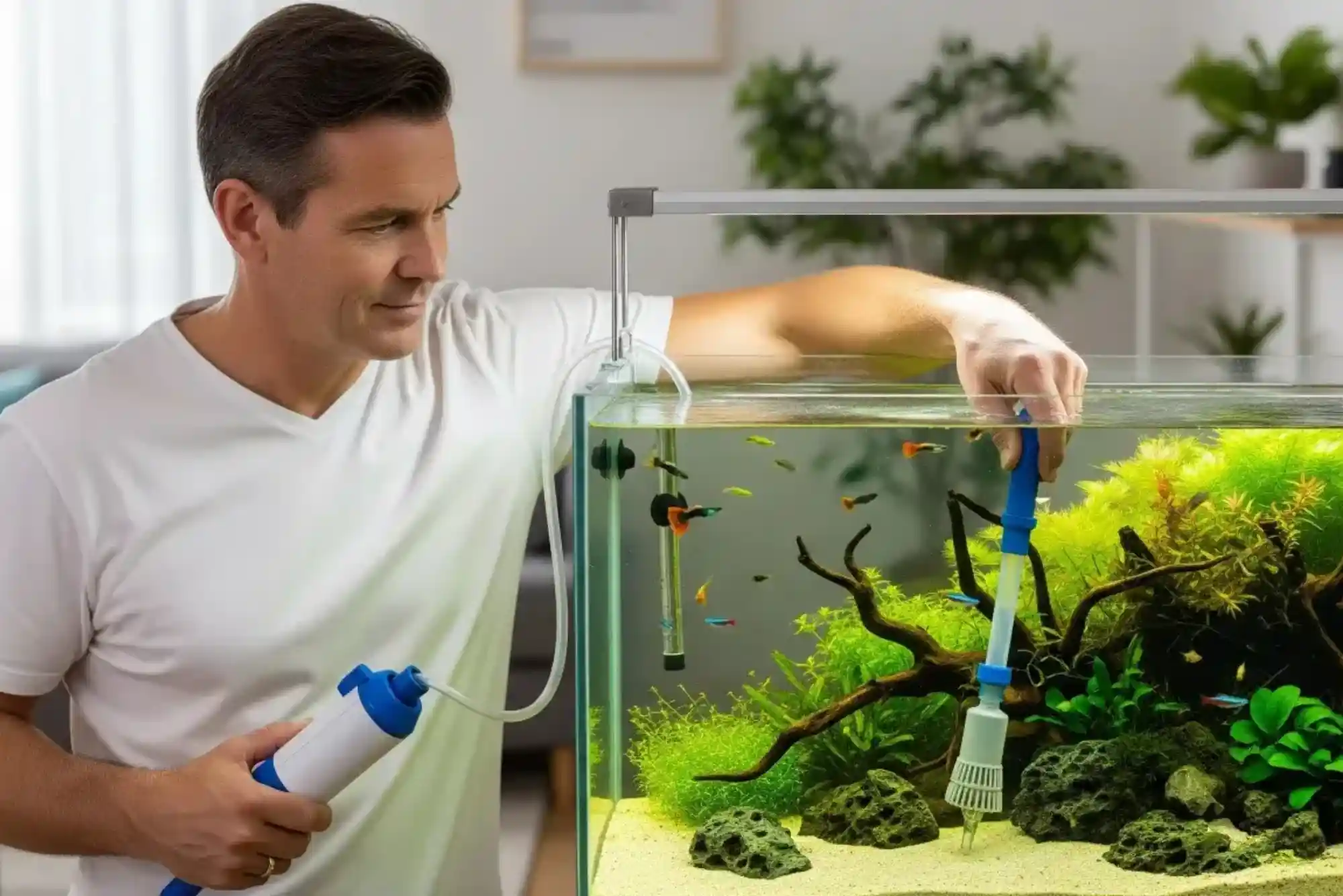
Rather than aggressively stirring the entire bed, gently vacuum the surface during water changes. This removes debris while preserving the useful biological environment in the aquarium.
Social behavior is another foundation of good Corydoras catfish care.
A practical minimum for most common species is six Corydoras of the same species. Aquarium Co-Op recommends six or more and notes that Corydoras naturally occur in much larger groups.
A group of six gives the fish more opportunity to display natural foraging and shoaling behavior. If your aquarium has sufficient floor space and filtration, a larger group can be even more visually impressive.
Keeping a single Corydoras is not recommended. These fish are social, and a lone specimen may behave differently from a confident group.
Pairs are also less desirable than a proper group. If you have enough aquarium space, building the population around one species is generally more straightforward than buying a few individuals from several species.
Different Corydoras species can often live peacefully in the same aquarium, but that does not automatically mean they form one ideal school.
For example, buying three panda Corydoras and three bronze Corydoras does not provide six members of one species. If natural schooling behavior is your priority, establish a proper group of one species first.
Once the aquarium is large enough, experienced aquarists may keep multiple species while maintaining adequate numbers of each.
One of the biggest mistakes in Corydoras catfish care is assuming these fish will survive entirely on leftover food.
They should receive dedicated meals.
Corydoras are omnivorous and readily accept a variety of sinking foods. Quality sinking pellets and wafers can provide a convenient staple, while frozen or live foods can add variety. Aquarium Co-Op recommends foods such as sinking wafers, worms, frozen bloodworms, and other appropriately sized sinking foods.
A varied diet can include quality sinking pellets, sinking wafers, frozen bloodworms, brine shrimp, and other appropriately sized foods.
The key is making sure the food actually reaches the Corydoras.
Fast-moving tank mates can consume floating flakes and pellets before they reach the bottom. In a busy community aquarium, feed Corydoras sinking food directly over their foraging area.
Feeding shortly after the aquarium lights go out can also help when surface and midwater fish are competing aggressively for food.
Many adult Corydoras do well with regular daily feeding, with portions adjusted to the number and size of fish.
Instead of following an arbitrary quantity, observe what happens after feeding. Food should be consumed within a reasonable period without leaving large amounts of uneaten material decomposing in the aquarium.
Young fish and breeding groups may require different feeding schedules, so their nutritional needs should be considered separately.
Another misconception about Corydoras catfish care is that these fish can live primarily by cleaning algae.
They cannot.
Corydoras may investigate algae-covered surfaces, but they should not be treated as a substitute for an algae-eating fish or aquarium maintenance routine.
Their main diet should come from nutritious foods deliberately provided by the aquarist.
This distinction is important because a tank can look “clean” while bottom-dwelling fish remain underfed. Feeding should always be planned around the nutritional requirements of the fish rather than the amount of leftover food available.
Stable water quality is more important than constantly chasing one supposedly perfect number.
Many commonly kept Corydoras thrive in mildly acidic to neutral conditions, although the acceptable range varies by species. Temperature requirements also differ between species. Aquarium Co-Op gives a general range of approximately 72–82°F for Corydoras while pointing out that individual species can have different preferences.
This is why identifying the species before choosing a permanent temperature is good aquarium practice.
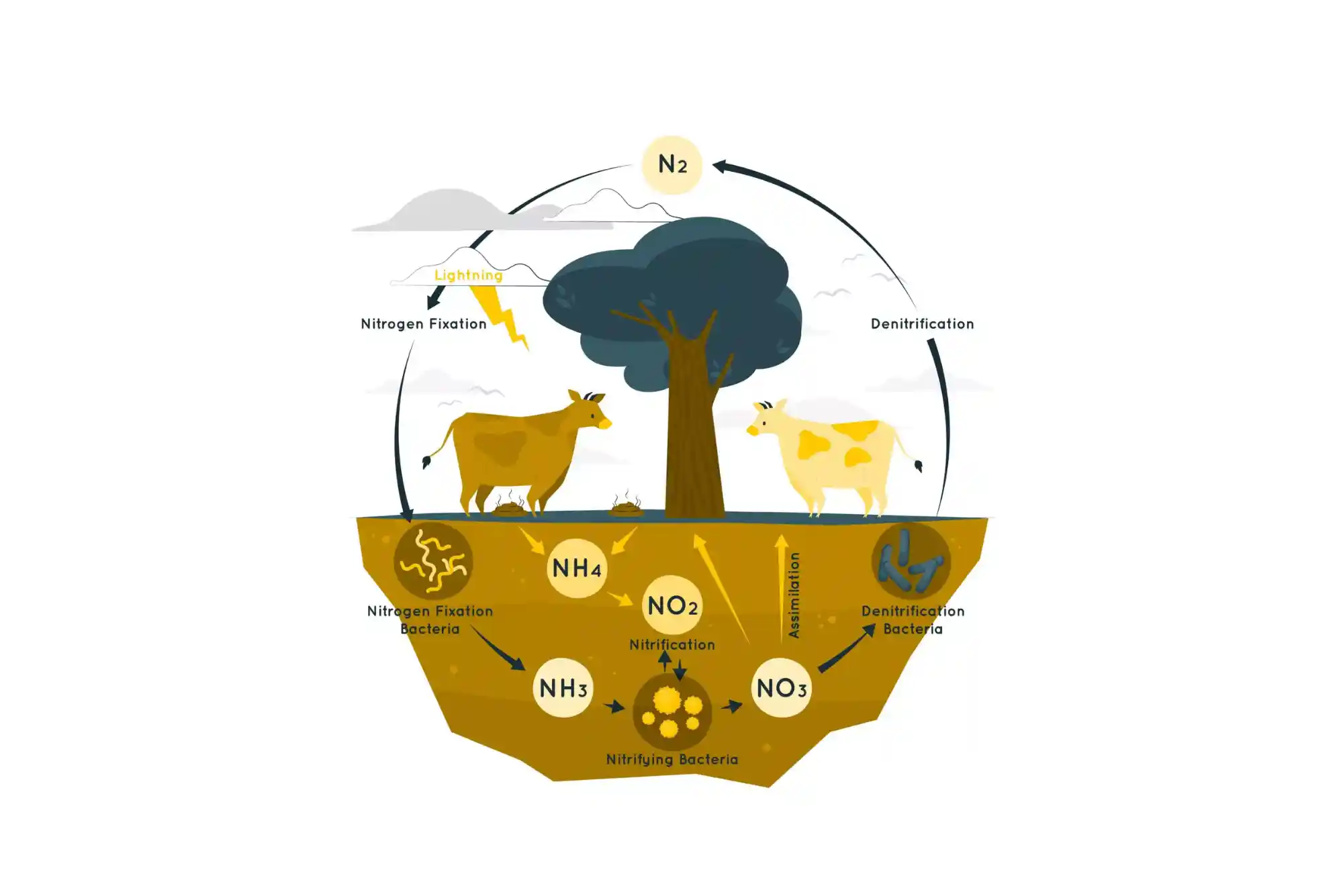
A fully cycled aquarium should have consistently undetectable ammonia and nitrite. Nitrate should also be controlled through routine water changes and appropriate stocking.
Corydoras spend much of their lives close to the substrate, so poor bottom-of-tank conditions can directly affect their environment.
Perform regular partial water changes, remove accumulated waste, clean the substrate carefully, and avoid sudden changes in temperature or water chemistry.
Good filtration and adequate oxygenation are also important. Corydoras are known to occasionally dart to the surface and gulp air. This behavior can be normal, although persistent or unusually frequent surface breathing should prompt an examination of water quality and oxygen levels.
The best Corydoras catfish care setup combines open foraging space with secure hiding areas.
Leave part of the substrate relatively open so the group can search for food. Plants can be positioned around the edges or toward the rear of the aquarium, while driftwood and smooth decorations can provide additional shelter.
Avoid filling the entire bottom with obstacles. Corydoras need room to move together and forage.
A gentle to moderate current is usually appropriate, provided the fish can comfortably navigate the aquarium. Strong flow that constantly pushes small Corydoras around can make feeding and resting more difficult.
Even experienced fishkeepers occasionally overlook small details. One of the most common mistakes is purchasing only one or two Corydoras because they appear inexpensive or because the aquarium store has limited stock.
Another is choosing attractive but sharp gravel without considering how frequently Corydoras interact with the substrate.
Underfeeding is another issue. A fish that scavenges around the aquarium is not necessarily receiving adequate nutrition.
Overfeeding creates the opposite problem. Excess food decomposes, contributes to poor water quality, and can make the aquarium harder to maintain.
Finally, mixing species without planning adequate group sizes can produce an attractive-looking aquarium without providing the social structure each species needs.
Healthy Corydoras are generally active, curious, and interested in food.
A comfortable group may forage together, rest on the substrate, explore plants and decorations, and periodically move around the aquarium.
Behavior should be interpreted in context. A fish hiding continuously, refusing food, losing condition, showing damaged barbels, or behaving abnormally should be examined rather than dismissed as “shy.”
Check water quality first, then review temperature, tank mates, feeding, substrate, and recent changes to the aquarium.
A successful routine does not need to be complicated.
Feed an appropriate sinking diet, monitor how much the fish actually consume, maintain clean water, and perform regular water changes. Inspect the fish during feeding because it is one of the easiest times to notice changes in body condition or behavior.
Keep the substrate clean without constantly disturbing it, and make sure the aquarium remains appropriately stocked as fish mature.
Most importantly, remember that Corydoras catfish care is about meeting their natural behavioral needs, not simply keeping them alive. A proper social group, suitable substrate, nutritious food, and stable water create an environment in which these fish can display the active, fascinating behavior that makes them so popular.
Good Corydoras catfish care comes down to understanding how these fish naturally live and feed. Give them a mature, clean aquarium, a safe sand or smooth substrate, nutritious sinking foods, and a proper social group.
For most common species, starting with six or more of the same Corydoras species provides a much better foundation than keeping one or two fish. Pay equal attention to the aquarium floor because Corydoras spend so much time foraging there.
For most common species, keeping at least six Corydoras of the same species is a practical recommendation. Larger groups can provide more confidence and stronger natural social behavior when the aquarium has enough space.
Fine, smooth sand is an excellent option because Corydoras use their barbels while foraging. Smooth, rounded fine gravel can also work. Avoid sharp-edged substrate that can injure their sensitive facial structures.
It depends on the species. Very small dwarf Corydoras may have different space requirements, while many standard species are better suited to larger aquariums. Aquarium Co-Op notes that 10 gallons may be suitable for dwarf species but recommends 20 gallons or more for most other varieties.
Quality sinking pellets or wafers can serve as a staple. Frozen or live foods such as bloodworms and other suitable foods can provide variety. Corydoras should receive deliberate feeding rather than relying only on scraps from other fish.
Corydoras can periodically gulp air at the surface as part of their normal physiology. Occasional surface trips can therefore be normal. However, persistent surface activity accompanied by lethargy or rapid breathing should lead you to check oxygen levels and water quality.
Corydoras are not primarily algae-eating fish. They may investigate algae or biofilm, but they still need a nutritious, dedicated diet of appropriate sinking foods.
Yes. Corydoras are generally peaceful and can work well with calm community species. Avoid aggressive or very large tank mates that may harass, injure, or consume them.