The modern nicotine market includes several products that can look similar at first glance but operate using very different technologies. Compact electronic devices, pod systems, disposable products, and heated tobacco systems are now common terms in discussions about nicotine consumption.
For adults in the UAE, understanding these categories can make it easier to interpret product information and distinguish between technologies. A small electronic device does not necessarily mean that it belongs to the same category as another device with a similar appearance.
The most useful starting point is to understand what each system is designed to heat and how its consumable works.
Early electronic cigarettes were relatively simple devices. They typically consisted of a battery, an atomizer or heating element, and a cartridge containing liquid.
Over time, manufacturers developed smaller and more specialized designs. Pod systems became increasingly common, while disposable products offered an integrated alternative.
At the same time, heated tobacco technology developed separately, using electronic heating systems designed specifically for tobacco-based consumables.
This has resulted in a market containing several distinct categories rather than one universal type of electronic nicotine product.
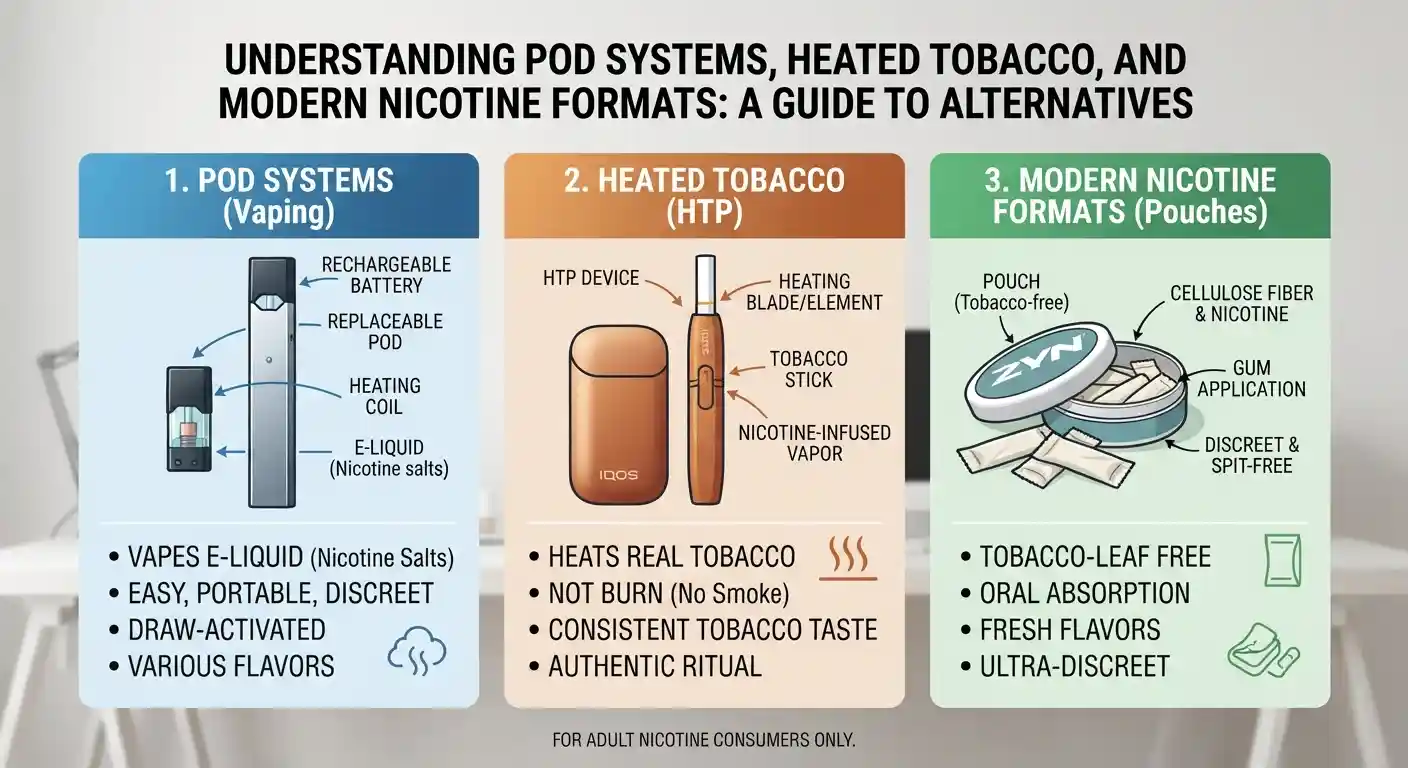
A pod system generally consists of two primary sections: the electronic battery device and the pod.
The battery provides power to the heating element, while the pod contains the liquid or other consumable material.
Pods can be pre-filled or refillable depending on the system. Some are designed to be replaced once empty, while others can be refilled multiple times before replacement becomes necessary.
This modular construction distinguishes pod systems from many disposable devices where the battery, liquid reservoir, and heating components are integrated into one body.
The pod is more than simply a container.
It interacts with the heating element and airflow system, meaning that the design of the pod can affect how the device operates.
Different pod systems can use different resistance levels, liquid formulations, airflow arrangements, and heating technologies.
For this reason, pods are generally designed for specific devices. A cartridge made for one system may not be compatible with another manufacturer’s hardware.
E-liquid is a key component of most conventional pod devices.
It can contain a combination of ingredients such as propylene glycol, vegetable glycerin, flavorings, and nicotine. The exact formulation varies from product to product.
Nicotine concentration is particularly important because nicotine is addictive. Adults should check product information carefully rather than assuming that every pod contains the same concentration.
People researching Pod Salt Dubai, for example, may come across information related to nicotine-containing e-liquids and pod-compatible formulations. The broader technical issue is understanding what an e-liquid contains and whether it is designed for a particular device.
There are two broad approaches to pod consumption.
Pre-filled pods come with liquid already inside them. They are generally replaced after the contents have been used.
Refillable pods allow compatible e-liquid to be added manually. This can provide greater flexibility but also introduces additional handling and maintenance.
Neither format should automatically be considered better for every situation. They are simply different approaches to delivering liquid through a pod-based system.
Heated tobacco technology belongs to a separate category.
Instead of heating an e-liquid, these systems are designed to heat specially prepared tobacco consumables. The device uses controlled heating rather than the conventional combustion process associated with traditional cigarettes.
This distinction is important because heated tobacco products are sometimes incorrectly grouped together with ordinary vaping devices.
Understanding the consumable provides a simple way to tell the difference between the categories.
TEREA is associated with a heated tobacco product format designed for compatible heating devices.
When researching Terea Dubai, it is therefore useful to understand that the term generally relates to the heated tobacco category rather than a conventional vape pod or e-liquid.
The consumable and heating mechanism are designed around tobacco rather than the liquid formulation normally found in electronic cigarettes.
Although both systems use electronic heating, their underlying materials and operating principles are different.
Modern technology has made many nicotine devices extremely compact.
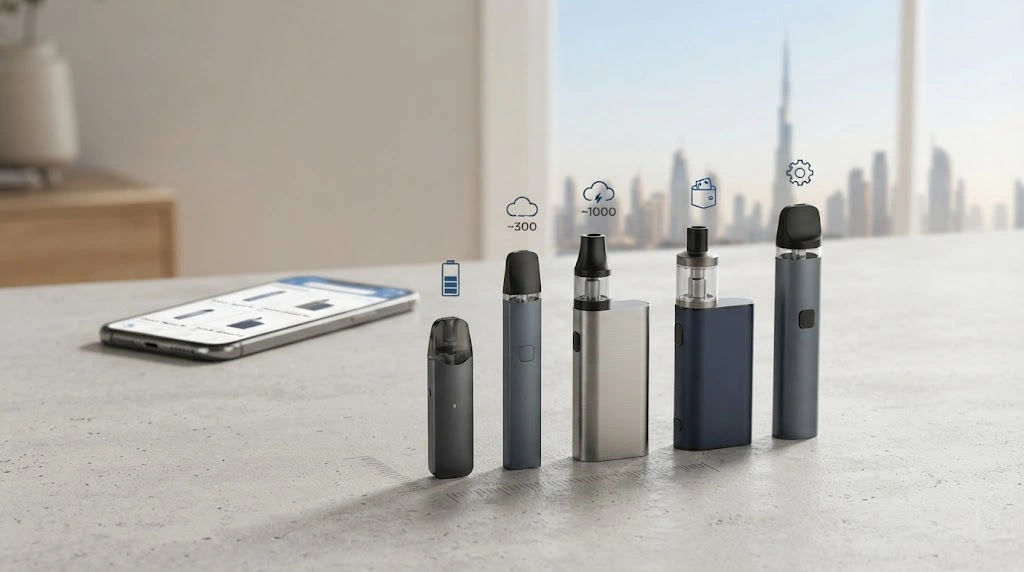
A pod device may have a slim rectangular body, while a heated tobacco device can have a similarly small shape. Disposable products can also use comparable designs.
This means visual appearance alone is not enough to identify a product category.
Consumers should look at the manufacturer’s description, compatible consumables, battery information, and operating instructions to understand what a device actually does.
Rechargeable batteries are common in modern pod and heated tobacco devices.
The battery supplies energy to the heating system and may also power sensors, charging controls, indicators, and other electronics.
Different products can use different battery capacities and charging systems. Some compact devices use built-in batteries, while larger equipment may use replaceable battery arrangements.
Battery care is important regardless of the product category. Devices should be charged according to the manufacturer’s instructions and protected from excessive heat or physical damage.
The heating element is another major component.
In a conventional pod device, the heating element interacts with e-liquid. In a heated tobacco device, the heating system is engineered around the characteristics of the tobacco consumable.
The temperature, airflow, and control system can therefore vary considerably between technologies.
This is why components from unrelated systems should not be mixed or modified. A heating element designed for one type of consumable may not be suitable for another.
Disposable vaping products take an integrated approach.
The liquid reservoir, battery, heating element, and electronics are generally housed inside one unit. This eliminates much of the maintenance associated with reusable systems.
However, the integrated design also means that the entire electronic product may become waste once it reaches the end of its intended life.
From an environmental perspective, this creates a different set of considerations compared with reusable pod systems.
Technology should not distract from the role of nicotine.
Many electronic nicotine products contain nicotine, which can cause dependence. The method used to deliver nicotine does not eliminate the addictive nature of the substance.
Adults who do not currently use nicotine should not begin using nicotine products because a particular device appears modern or convenient.
Anyone who already uses nicotine should understand the product’s contents and be aware of the potential for dependence.
Electronic nicotine devices should be treated as electronic equipment rather than ordinary disposable objects.
Devices should be kept away from excessive heat and moisture. Charging should follow the manufacturer’s recommendations, and damaged equipment should not be used.
Pods, cartridges, and other consumables should also be handled according to product instructions.
These simple precautions can help reduce avoidable equipment and battery-related problems.
The growing use of electronic products has also increased attention toward electronic waste.
Reusable pod systems allow the main battery unit to remain in service while pods are replaced. Heated tobacco systems generate waste through their consumable tobacco products, while disposable vapes can result in the disposal of the complete electronic device.
Where local electronic-waste disposal facilities or instructions exist, users should follow them carefully.
Adults researching nicotine products in the UAE should also consider applicable regulations.
Rules can cover the sale, importation, advertising, age restrictions, and use of tobacco and electronic nicotine products. Public places may have additional restrictions concerning smoking and vaping.
Because regulations can be updated, information found in an old article or social media post may no longer be accurate.
Current official UAE guidance should therefore be checked whenever legal requirements are relevant.
The easiest way to summarize the main differences is to focus on the consumable.
A conventional pod vape heats e-liquid.
A disposable vape generally heats e-liquid inside an integrated, limited-use device.
A heated tobacco system heats a specially designed tobacco consumable.
This simple distinction explains many of the differences in device design, maintenance, and operation.
Pod systems and heated tobacco products may share compact electronic designs, but they represent different technologies. Pod systems are generally built around e-liquid and reusable battery devices, while heated tobacco systems are designed around specially prepared tobacco consumables.
Terms such as Terea Dubai and Pod Salt Dubai may appear together in online searches because both are connected to the broader nicotine market, but they represent different product categories.
For adults in the UAE, understanding these distinctions, checking nicotine content, handling batteries responsibly, disposing of electronic products appropriately, and following current local regulations are all important parts of informed decision-making.
Related Reading: Top 5 Algae Eaters for Freshwater Aquariums (Snails, Shrimp, Plecos)
Related Reading: Gris Dior by Dior: The Elegant Unisex Scent Redefining Modern Luxury
Related Reading: Understanding the Effects of Sildenafil and Duloxetine
Related Reading: Transforming Precision Strikes in Modern Warfare
Related Reading: Bangalore Real Estate